
Gear Comparison
Beach umbrella vs. Shibumi Shade: which should you choose?
A traditional umbrella is compact, familiar, and usable without a steady breeze. A Shibumi Shade Classic is dramatically lighter than many people expect and creates far more shared shade, but its wind-powered design changes how and where it works best.
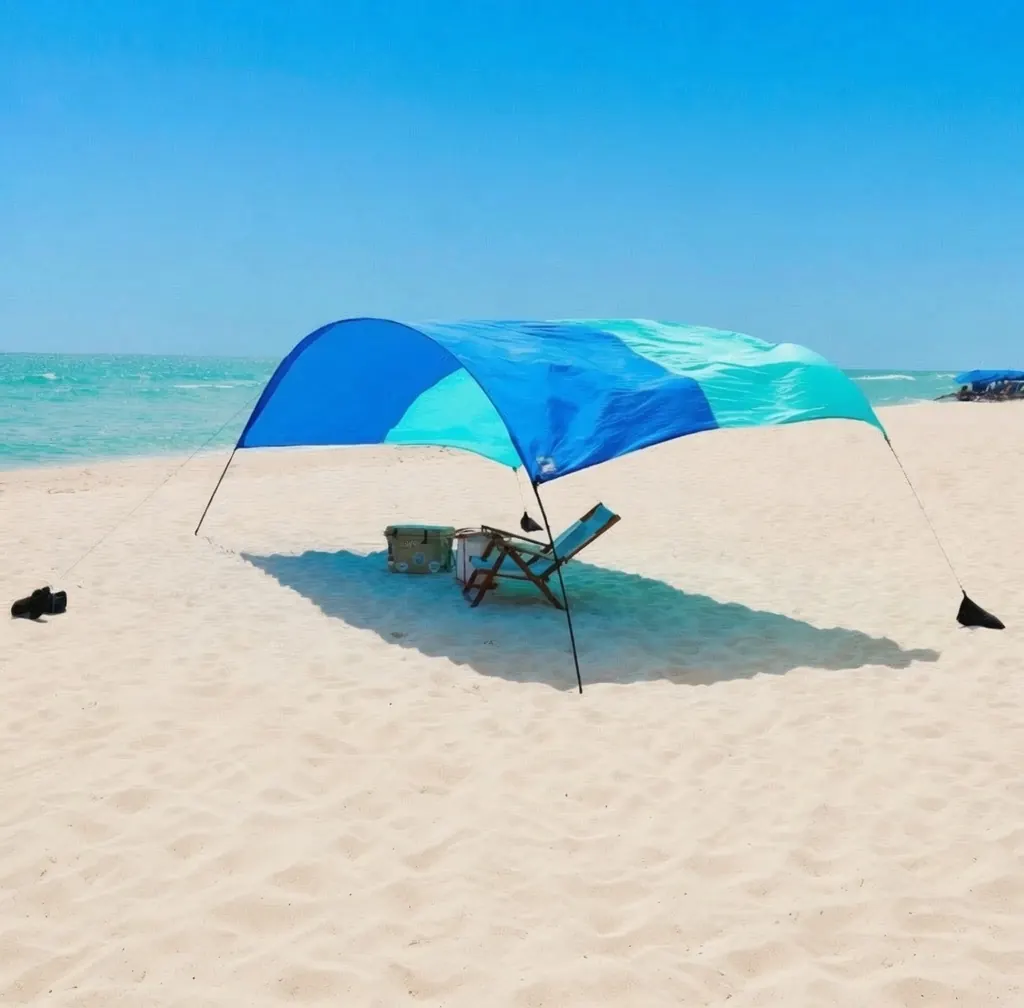
The Short Answer
Which one to choose
Choose a beach umbrella for one or two people, tighter beach space, or days when the breeze is uncertain. Choose a Shibumi Shade Classic for a family or group that wants broad coverage with much less carry weight, provided the beach has a light, reasonably consistent breeze and enough open setup room.
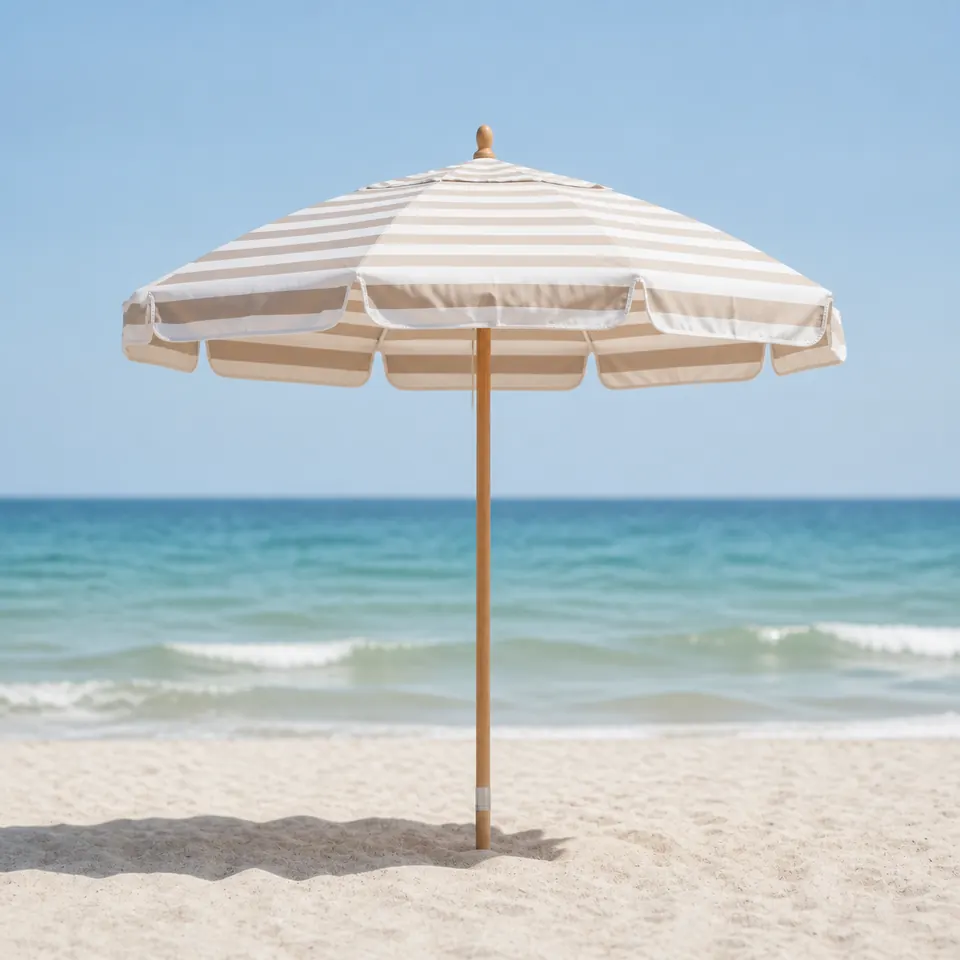
At A Glance
Beach umbrella vs. Shibumi Shade Classic
Umbrella specifications vary by model. Shibumi figures are current manufacturer specifications for the Classic; confirm the exact rental fleet item before booking.
| Consideration | Beach umbrella | Shibumi Shade Classic |
|---|---|---|
| Best for | One or two people; compact seating | Families and groups; shared coverage |
| Shade area | Focused shade; varies by canopy size | Up to 150 sq. ft. listed by Shibumi |
| Carry | Rigid pole and canopy; model weight varies | Under 4 lb; 26 × 5 in carry bag |
| Setup | Familiar pole-and-anchor setup | One-person setup in under 3 minutes |
| Wind | Must be securely anchored against gusts | Uses roughly 2–3 mph of breeze to lift the canopy |
| Calm conditions | Works without steady wind when properly anchored | Current model includes Wind Assist |
| Sun protection | UPF depends on the specific canopy | UPF 50+; manufacturer says it blocks 98% of UV rays |
| Space needed | Smaller footprint around the pole | Wider curved frame and clear downwind canopy space |
How a Shibumi Shade works
The Classic uses one long curved frame planted in the sand. A rectangular fabric canopy attaches to the frame and floats downwind, so the breeze creates the shaded area instead of pushing against a rigid roof.
According to Shibumi, a light 2–3 mph breeze is generally enough to keep the canopy aloft. The current Quiet Canopy model includes Wind Assist: corner attachments and sandbags that form a tent-like shape when the breeze is too light to do all the work.
That wind-powered geometry is the central tradeoff. It avoids a heavy frame and creates broad, open shade, but the canopy needs a clear downwind area and may shift as wind direction changes.
Size, weight, and portability
The numbers are the clearest reason groups consider a Shibumi. The Classic is listed at up to 150 square feet of shade while weighing under 4 pounds. It packs into a 26 × 5 inch carry bag, which is easier to place in a car and carry over a shoulder than a rigid umbrella pole.
Shibumi says the Classic can fit up to eight people, while its detailed guidance describes family groups of roughly three to six with room for bags and beach gear. Real capacity depends on chair spacing, sun angle, and how much gear you keep under the canopy.
Where a traditional beach umbrella is better
An umbrella gives a smaller, more defined patch of shade. That is often exactly right for one or two chairs, a crowded beach, or a group that expects to reposition shade as the sun changes.
It also does not need a continuous breeze. The umbrella still must be installed with an appropriate sand anchor and handled according to beach rules, but calm conditions do not prevent the canopy from doing its job.
- Smaller footprint around a compact seating group
- Familiar setup and easy repositioning
- Predictable shade on calm days
- A useful fallback when wind direction is variable or beach space is constrained
What wind really means in practice
A Shibumi is not simply a windy-day product. It needs a light, usable breeze from a direction that leaves room for the canopy. Too little breeze may require Wind Assist; shifting wind can move the shaded area or prompt you to reorient the frame.
A traditional umbrella has the opposite relationship with wind: it does not need wind to create shade, but stronger gusts increase the importance of secure anchoring and attentive use. Never leave either shade unattended, and follow lifeguard and municipal instructions.
Setup, packing, and the walk to the sand
Shibumi says one person can connect the poles, thread the canopy, and plant the frame in under three minutes. The current Classic includes the canopy, poles, carry bag, and Wind Assist. After use, shake out sand and allow material to dry before storage.
The Shibumi wins on low carry weight; the umbrella wins on compact setup area. If the group is also moving six chairs, a large cooler, toys, and towels, add a wagon regardless of which shade you choose.
Our practical recommendation
For one or two people, start with one well-anchored umbrella. It is simple, takes less lateral space, and works when the air is still.
For a family or house group, choose a Shibumi Shade when broad shared coverage and low carry weight matter more than a compact footprint. For a long stay with changing conditions, the most flexible setup may be one Shibumi for the group plus one umbrella for a separate calm-day patch of shade.
Common Questions
Frequently asked questions
How much wind does a Shibumi Shade need?
Shibumi says roughly 2–3 mph of breeze is enough for the canopy. The current Classic includes Wind Assist for very light or calm conditions.
How many people fit under a Shibumi Shade Classic?
Shibumi lists up to eight people and separately recommends the Classic for family groups of about three to six with room for bags and coolers. Chair spacing and sun angle affect practical capacity.
Is a Shibumi lighter than a beach umbrella?
The Classic is listed at under 4 pounds. Umbrella weights vary, but they include a rigid pole and canopy, so the carrying experience is different even when weights are close.
Does a Shibumi replace sunscreen?
No. UPF-rated shade reduces direct UV exposure under the canopy, but reflected and angled sunlight still reach users. Continue using sunscreen, hats, and other sun protection.
Are Shibumi Shades allowed on Hamptons beaches?
Rules can change by municipality, beach, and season. Check current official beach rules and follow lifeguard instructions before setup.
Sources and product notes
Manufacturer specifications were reviewed July 30, 2026. Product details can change; Hamptons Beach Co confirms the rental fleet item before booking.
Published by Hamptons Beach Co. Beach rules, access, and product specifications can change; verify current local and manufacturer guidance.